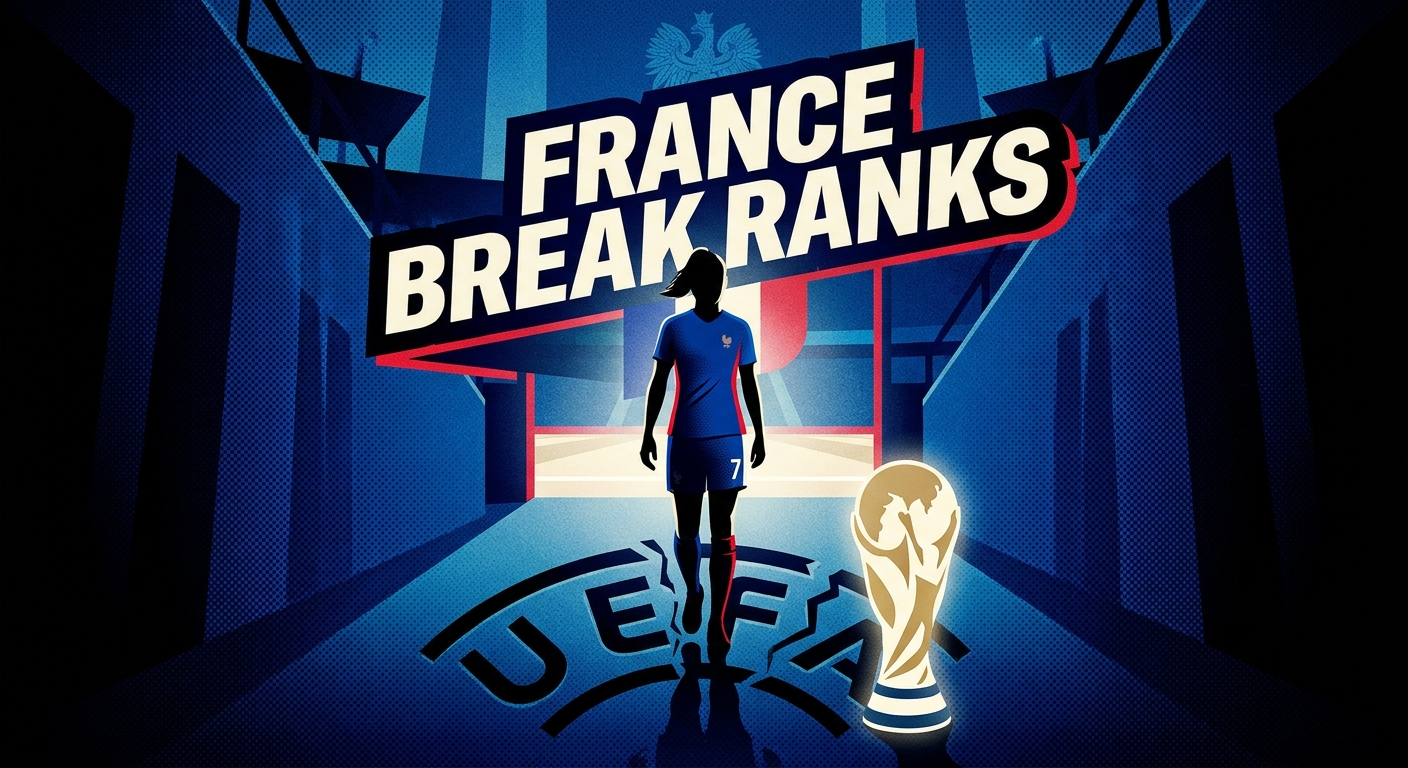
European football’s historic, united front against FIFA has taken its first major casualty. Less than two weeks after UEFA’s 55 member nations unanimously pledged to boycott all FIFA competitions over President Gianni Infantino’s highly controversial private investment plans, the French Football Federation (FFF) has blinked. France has confirmed they are set to take part in the upcoming Under-20 Women’s World Cup in Poland next month, defying UEFA’s explicit threats and throwing the continent's protest into disarray.
For those analysing the escalating civil war between Zurich and Nyon, this outcome felt almost inevitable. Geopolitics in football is a high-stakes game, but using youth tournaments as leverage is notoriously difficult to sustain when the flights are booked and the players are ready to take the pitch.
The First Crack in the Wall
To understand the gravity of France’s decision, we have to look at the unprecedented scale of UEFA’s initial threat. In late July, Infantino pitched a plan to sell stakes in the World Cup and other major tournaments to US-based private investors at a valuation of $20 billion, drawing interest from figures like Josh Kushner. Outraged by the creeping privatisation of the global game and citing a profound abuse of power, UEFA President Aleksander Čeferin rallied his members. They drew a decisive line in the sand: no European nation would participate in FIFA tournaments until the proposal was entirely abandoned and binding assurances were made.
Even when Infantino issued a rare apology and shelved the plans earlier this week, UEFA maintained their hardline stance, claiming the conditions to lift the boycott had not been met. But solidarity at a board meeting in Switzerland is very different from telling a generation of elite young athletes that their World Cup dreams are cancelled. By confirming their attendance for the September 5th kick-off, France has essentially told UEFA that the political posturing stops at the touchline.
Collateral Damage: The Women’s Game
From an analytical standpoint here at Matchwise, the data underscores exactly why federations are hesitant to skip this tournament. The U20 Women's World Cup is the ultimate proving ground for future senior stars; our metrics show that the vast majority of players who feature prominently at the U20 level transition to their senior national teams within two tournament cycles. European nations have dominated this competition historically, reaching the final in six of the last seven editions.
To forcibly withdraw all six qualified UEFA teams—Spain, England, Italy, Portugal, France, and hosts Poland—would have dealt a devastating blow to the tournament's sporting integrity and the players' career trajectories. Furthermore, the women’s game was poised to be the first major victim of a war started over men's tournament revenues. Using the women's calendar as collateral damage was a strategic misstep by UEFA that severely tested the loyalty of its most progressive members.
What Happens Next?
France’s defection is a tactical nightmare for UEFA and an absolute lifeline for Gianni Infantino. A boycott only works if it is absolute. Now that the FFF has broken ranks, the pressure shifts immediately to the other five European qualifiers. Will reigning 2022 champions Spain really stay home while France competes? How can host nation Poland abandon a tournament taking place on their own soil?
The dominoes are teetering. If UEFA attempts to sanction France, they risk sparking an internal civil war that could fracture European football entirely. If they do nothing, their boycott looks toothless, essentially giving FIFA a free pass to quietly reintroduce its private equity schemes once the dust settles.
France has made the pragmatic, player-first choice, but the geopolitical fallout will be immense. As we look ahead to the next wave of qualifiers and next summer's 2027 Women's World Cup in Brazil, one thing is certain: European football's unified front was a mile wide, but only an inch deep.