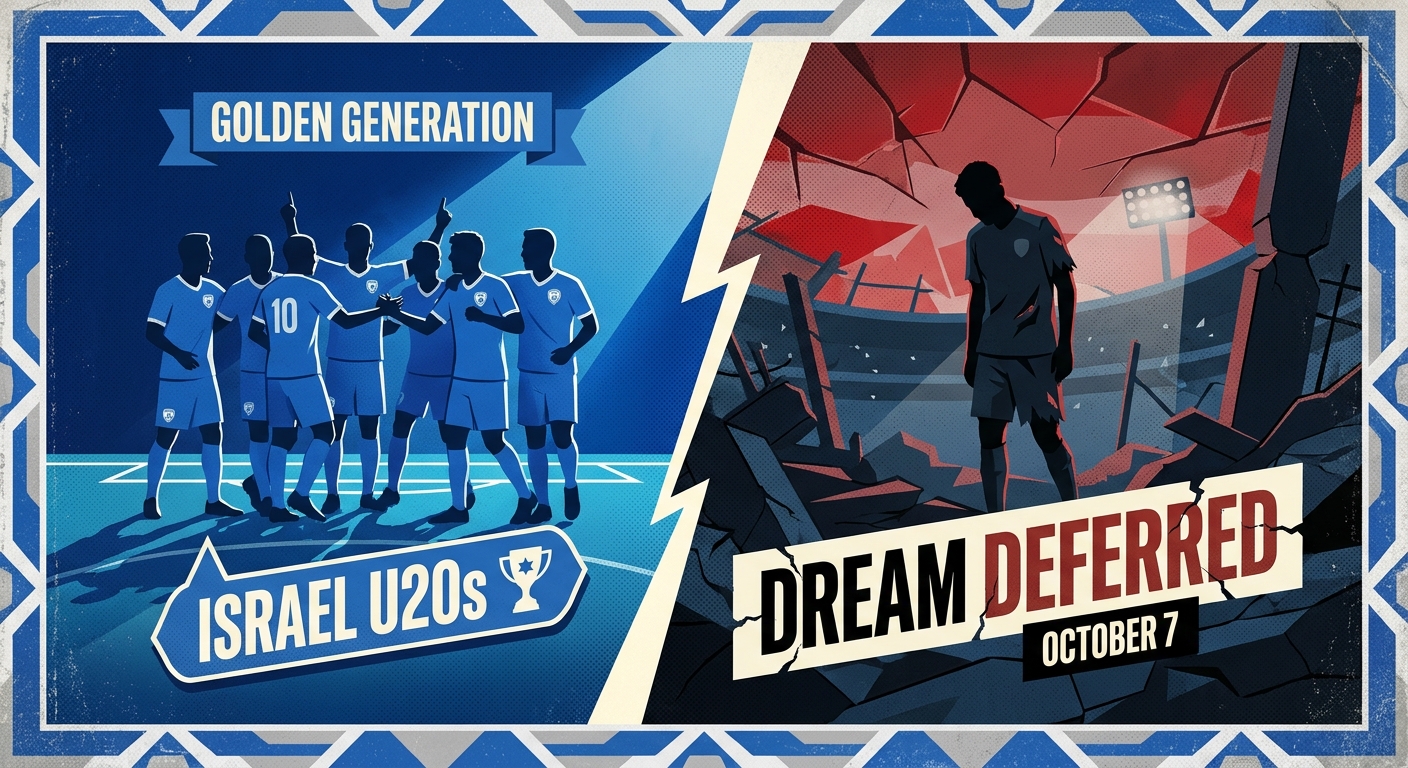
In June 2023, an unprecedented story unfolded on the pitches of Argentina. Israel’s Under-20 men's national team, making their first-ever appearance at the FIFA U-20 World Cup, embarked on a miraculous run that culminated in a bronze medal. But it wasn't just the tactical brilliance or the giant-killing victories over Brazil and Japan that captured the world's attention. It was what the team represented.
For a few fleeting weeks, a squad seamlessly blending Jewish and Arab Israeli players became a beacon of hope for a deeply divided region. "There are no Jews and Arabs on this team," head coach Ofir Haim famously remarked during the tournament. "There is only one big, united family. If only we would learn to live in such brotherhood and peace in our country."
Four months later, that fragile dream collided with an unthinkable reality. On October 7, 2023, Hamas attacked Israel, sparking a devastating war that continues to reshape the Middle East. Overnight, the narrative shifted from coexistence and sporting triumph to grief, trauma, and geopolitical strife.
A Glimpse of What Could Be
To understand what was lost—or at least deferred—you have to understand the magic of that summer. The U-20 squad was universally heralded as Israel's "golden generation." It featured rising stars like Oscar Gloukh, the dazzling creative midfielder, alongside standout Arab Israeli forwards Anan Khalaili and Hamza Shibli. When Israel staged a dramatic 3-2 comeback against Brazil in the quarter-finals, two of the goals were scored by Arab players, who celebrated with Islamic prayers of thanksgiving alongside their Jewish teammates.
The optics were powerful. In a society often fractured by religious and ethnic fault lines, the football pitch offered a genuine meritocracy. It challenged the darkest cynical takes on the region's future and proved that structural integration could yield extraordinary results on the global stage.
The Collapse of the Footballing Bubble
The October 7 attacks and the ensuing war in Gaza shattered the normalcy required to sustain that sporting momentum. Suddenly, football was a complete afterthought, yet paradoxically, it became a battleground for the very tensions the U-20 team had managed to transcend.
Domestically, the Israeli Premier League ground to a halt before restarting under the shadow of war, with stadiums draped in banners memorializing victims and hostages. The fragile truce between Arab and Jewish supporters at club level—most notably tested in fixtures involving Bnei Sakhnin, Israel's most prominent Arab club, and right-wing fanbases like Beitar Jerusalem—was stretched to the breaking point.
Internationally, the promise of the golden generation met immediate logistical and political hurdles. The senior national team, integrating many of the U-20 graduates, was forced to play its "home" Euro 2024 and World Cup qualifiers in exile, hosting matches in stadiums in Hungary. Deprived of home support and dealing with the psychological toll of the conflict, their campaigns have been an uphill battle.
Can the Promise Be Realized?
Today, as the sport world looks ahead, the lingering question is whether the potential of this golden generation can still be realized—both as elite athletes and as societal symbols.
From a purely analytical footballing perspective, the talent remains undeniable. Oscar Gloukh has established himself in Europe with Red Bull Salzburg, drawing eyes from top-tier clubs. Anan Khalaili earned a high-profile move to Europe, while several members of Haim's squad formed the core of the Israeli team that competed at the Paris 2024 Olympics, gaining invaluable high-stakes experience.
Yet, the burden they carry is heavier than tactical development or transferring to bigger leagues. They are tasked with representing a nation in deep trauma on an increasingly hostile global stage, as evidenced by security incidents and protests surrounding Israeli teams playing abroad in Europe.
At Matchwise, our data models can predict player trajectories, expected goals, and qualification probabilities. But no algorithm can quantify the resilience required to thrive under these conditions. The story of Israel’s golden generation is no longer just about whether they can qualify for major tournaments. It is about whether the spirit of unity they forged in Argentina can survive the darkest chapter in their nation's modern history. The hope they offered hasn't been entirely extinguished, but the road to realizing it is steeper than ever.