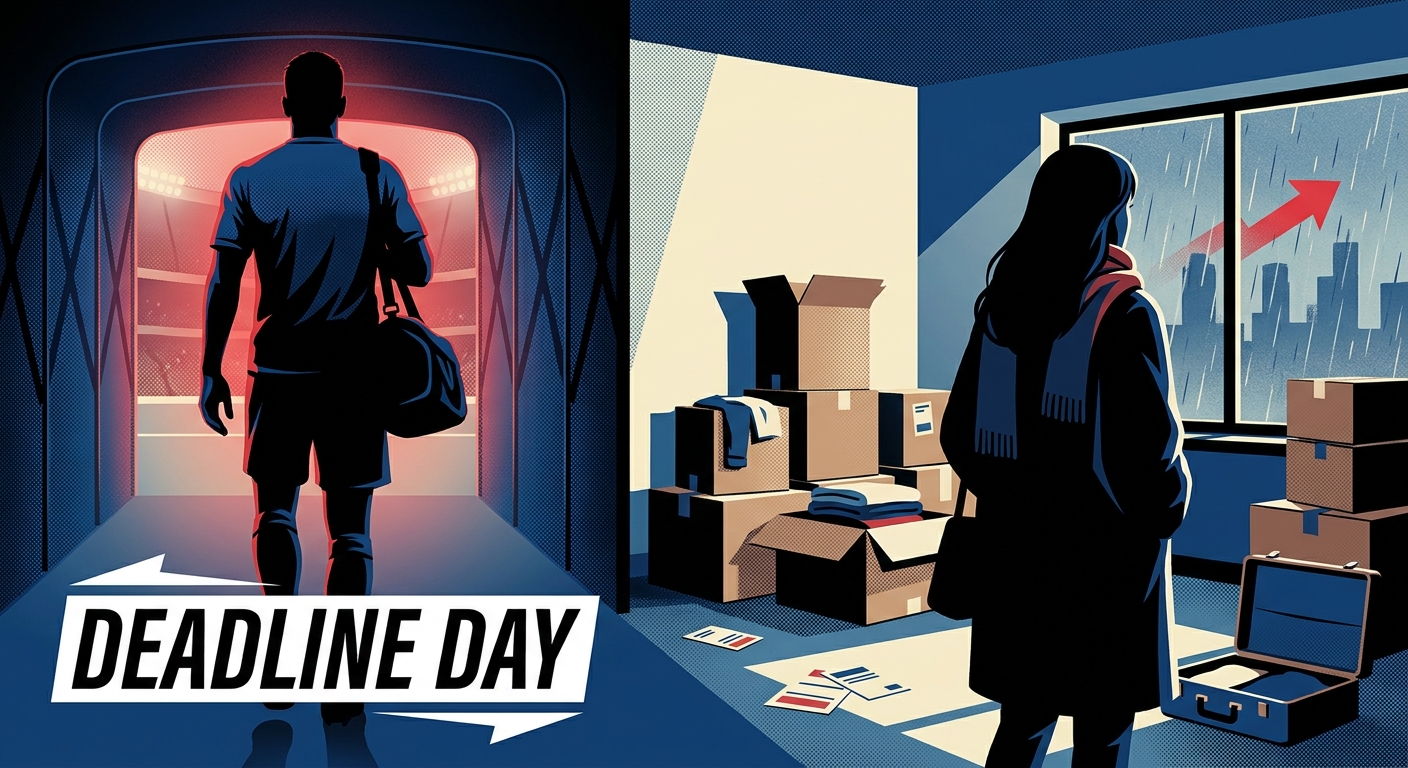
To the average football fan, the transfer window is an intoxicating blur of late-night rumors, flight trackers, and Fabrizio Romano’s trademark "Here we go!" But behind the euphoric unveiling videos and the hastily printed jerseys lies a frantic, often overwhelming reality. For the wives and girlfriends (WAGs) of professional footballers, a sudden transfer isn't just a career milestone for their partner—it is a localized earthquake that uproots their entire existence with zero notice.
The glitz and glamour stereotypically associated with the WAG lifestyle often mask the extreme logistical and emotional labor required when a player signs a deadline-day deal. While the player is instantly integrated into a highly structured environment with 30 new teammates, daily training schedules, and dedicated club liaisons, their family is frequently left to navigate the chaos of relocation entirely on their own.
The Chaos of the 11th Hour
Imagine being told at 9:00 PM on a Tuesday that your husband’s employer is relocating him to a different country, and he needs to be on a private jet by midnight. This is the brutal reality of the transfer window, particularly the January mid-season scramble. Partners are tasked with breaking leases, packing up homes, and pulling children out of schools—often without speaking the local language of their new destination.
Sociological studies into the migration of football labor have repeatedly highlighted this dynamic as an "unpaid labor of love". Researchers note that coping with the itinerant lifestyle of a footballer is profoundly isolating. The partner essentially becomes a high-level logistics manager, handling everything from international bureaucracy to finding new pediatricians. And when the dust settles, the isolation sets in. With the player traveling for away matches and European fixtures up to three days a week, partners are frequently left alone in a sprawling, unfamiliar house in a city where they know no one.
Split Families and The Hotel Years
Because the disruption is so severe, families are increasingly choosing simply not to move, deciding that the psychological toll and the impact on their children's education are too high a price to pay. Liverpool manager Arne Slot has recently become the modern reference point for this difficult dynamic. Upon taking the biggest job of his career at Anfield, his wife Mirjam and their children remained in the Netherlands. The decision was practical: his children were in crucial exam years, and pulling them out mid-cycle was deemed unfair. It was a family-first decision, but one that results in a split existence, with Slot immersed in Merseyside while his family visits periodically.
Slot is far from the first to endure this reality. Famously, José Mourinho spent his entire tenure at Manchester United living out of a suite at the Lowry Hotel, while his wife Matilde and their children stayed back in London. It is a grueling trade-off that the sport rarely acknowledges: choose between uprooting your family's entire support system, or living hundreds of miles apart for months on end.
An Analytics Perspective: The ROI of Settled Families
At Matchwise, we spend our days analyzing the game through expected goals, pressing triggers, and amortized transfer values. But human variables consistently disrupt even the most sophisticated statistical models. A player who is stressed about his family’s housing situation, or worried about his partner’s severe isolation in a foreign city, is fundamentally incapable of performing at his physical and mental peak.
Historically, clubs have treated the player's family as an afterthought, throwing a bit of money at the problem and expecting instantaneous assimilation. However, elite data-driven clubs are beginning to realize that protecting their multimillion-euro investments means providing comprehensive, long-term support for the player's family. Leading agencies are now focusing heavily on player care and empathetic transitions, recognizing that if a £60 million striker’s partner is miserable, that player will likely push for a move within 18 months, destroying the club's long-term tactical project and transfer ROI.
The transfer window will always be football's favorite soap opera. But the next time a blockbuster deal is announced in the dying minutes of deadline day, spare a thought for the partners off-camera—scrambling to pack suitcases, cancel utilities, and somehow make a completely foreign city feel like home before the weekend's kickoff.