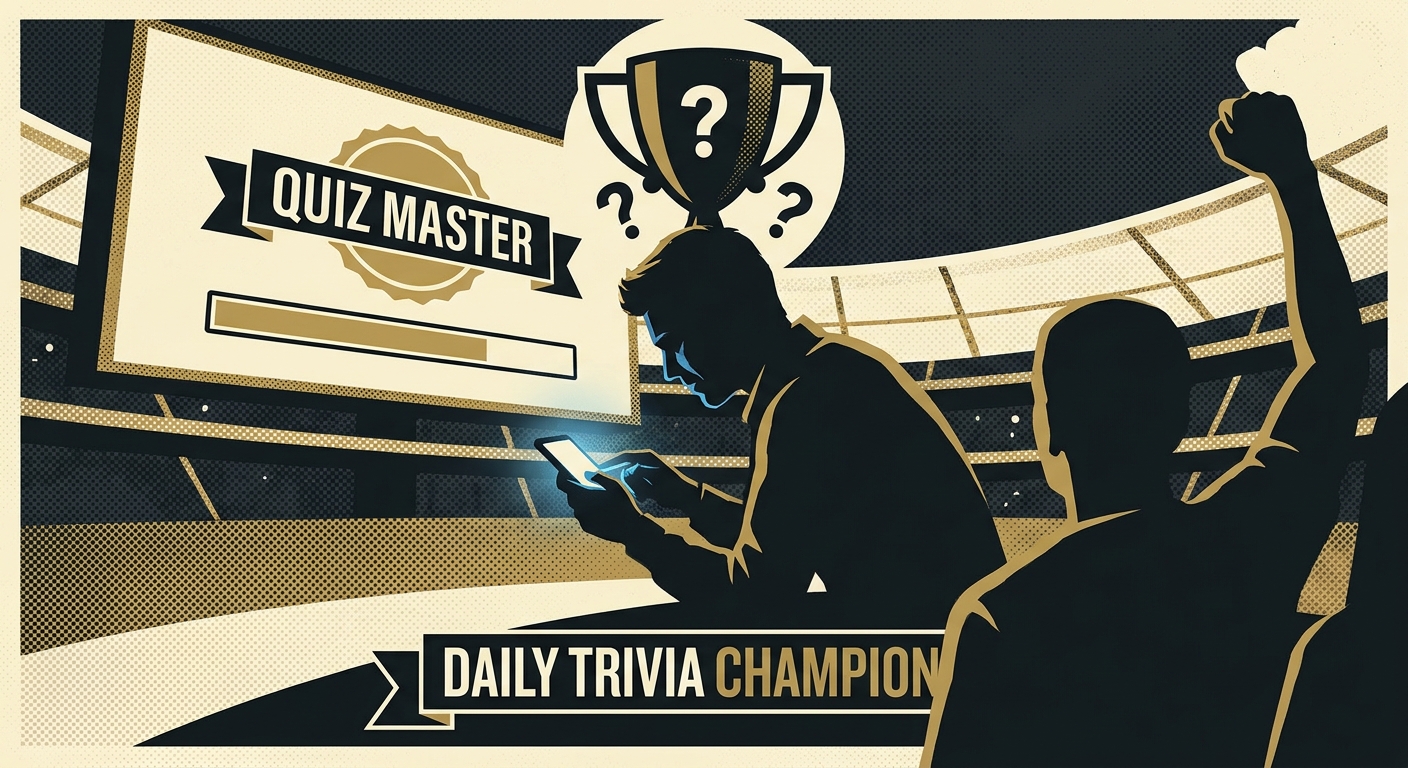
The Daily Morning Ritual
Before the tactical breakdowns, the expected goals (xG) charts, or the heated debates about the weekend's VAR decisions, the modern football fan faces a different kind of test. BBC Sport's daily barrage of football trivia—spanning the Who Am I?, Five in Five, and the notoriously tricky Brainteaser—has quietly become an inescapable morning ritual for supporters across the globe.
It is no longer enough to just watch the game. In today's hyper-connected, hyper-analyzed football ecosystem, you have to prove you genuinely know the game. And what better way to flex your football brain than by identifying a journeyman striker from the 2008-09 Premier League season based on a silhouette and a list of former clubs?
The Anatomy of the Trivia Trifecta
The BBC's format, masterminded by quiz setters like Joe Rindl, taps perfectly into the gamification of daily digital life. The mechanics are simple but deeply addictive.
First, there is Who Am I?—a test of deductive reasoning where incorrect guesses slowly unlock more clues. The fewer clues you need, the higher your pedigree. Then comes the adrenaline rush of Five in Five, challenging participants to fire off five correct answers against a ticking clock. Finally, the Brainteaser sits as the ultimate boss battle of the day, offering a fiendishly difficult question with only five lives standing between you and the crushing defeat of seeing the answer revealed.
The sheer volume of players passing through Europe's top leagues means the trivia well is effectively bottomless. One day, you might be wracking your brain trying to remember which club loaned out a young Kevin De Bruyne; the next, you are trying to recall the exact sequence of managers Chelsea employed between 2010 and 2015. It is a merciless test of both short-term recall and long-term retention. The platform has even set up avenues for fans to submit their own fiendish questions, effectively crowdsourcing the intellectual torture.
For analytics junkies and tactical purists—the core demographic here at Matchwise—these quizzes hit the same dopamine receptors as a perfectly executed defensive block or a 95th-minute winner. Group chats no longer just argue over whether a manager's pressing system is outdated; they light up with competitive screenshots of quiz results.
Why "Ball Knowledge" is the New Currency
At Matchwise, we spend our days parsing through player heat maps, passing networks, and predictive modeling. We understand the value of data. But the rise of these daily quizzes highlights a different kind of data: nostalgic, obscure, and wonderfully pedantic trivia.
The phrase "ball knowledge" has evolved into the ultimate currency on social media and in real life. It is a badge of honor. When a fan successfully identifies an obscure defensive midfielder from a 2012 Champions League group stage tie, they aren't just winning a game; they are validating their lifelong dedication to the sport. It is a pushback against the modern accusation of being a "casual."
In an era where every major match is heavily televised and scrutinized by AI models and tactical experts, fans are desperate for ways to differentiate their level of support. Anyone can watch a highlight reel and form an opinion on a newly signed £70 million winger. But knowing the starting left-back for a relegated side from eight years ago? That requires a foundational, almost pathological, immersion in the sport.
Football culture has always been rooted in pub debates and memory tests. Who scored the winner in the 1999 FA Cup semi-final? Who is the only player to score a hat-trick in the Premier League, Championship, League One, League Two, FA Cup, and League Cup? (It is Robert Earnshaw, by the way). Digital quizzes have simply taken this pub culture and scaled it globally, providing a quantifiable metric for our collective obsession.
The Intersection of Analytics and Trivia
There is a fascinating crossover between the fan who obsesses over a player's non-penalty xG and the fan who can name the starting XI of the 2004 Arsenal Invincibles. Both require an analytical mind, a deep well of retention, and an insatiable appetite for the minutiae of the sport.
As the sport continues to lean heavily into data, expect the gamification of football to grow even more sophisticated. We are already seeing interactive predictor games, fantasy leagues dictated by real-time analytics, and now, these daily mental gymnastics. It is a golden age for the thinking fan.
So, the next time your friend sends a screenshot showing they nailed the Brainteaser on their first attempt, give them the respect they deserve. In the modern era of football fandom, flexing your ball knowledge isn't just a pastime—it is a daily proving ground. Now, if you'll excuse us, we have a Five in Five timer to beat.